电子发票是什么?PDF 算不算?
从“看得见”到“系统读得懂”:一张发票如何成为可自动处理的数据。
你收到一张 PDF 发票,能在电脑上打开、打印、转发——它当然是电子文件。但它是不是我们通常所说的“结构化电子发票”?关键不在文件有没有放进电脑,而在发票信息能不能被另一个系统准确识别并继续处理。
先说结论:电子文件,不等于结构化电子发票
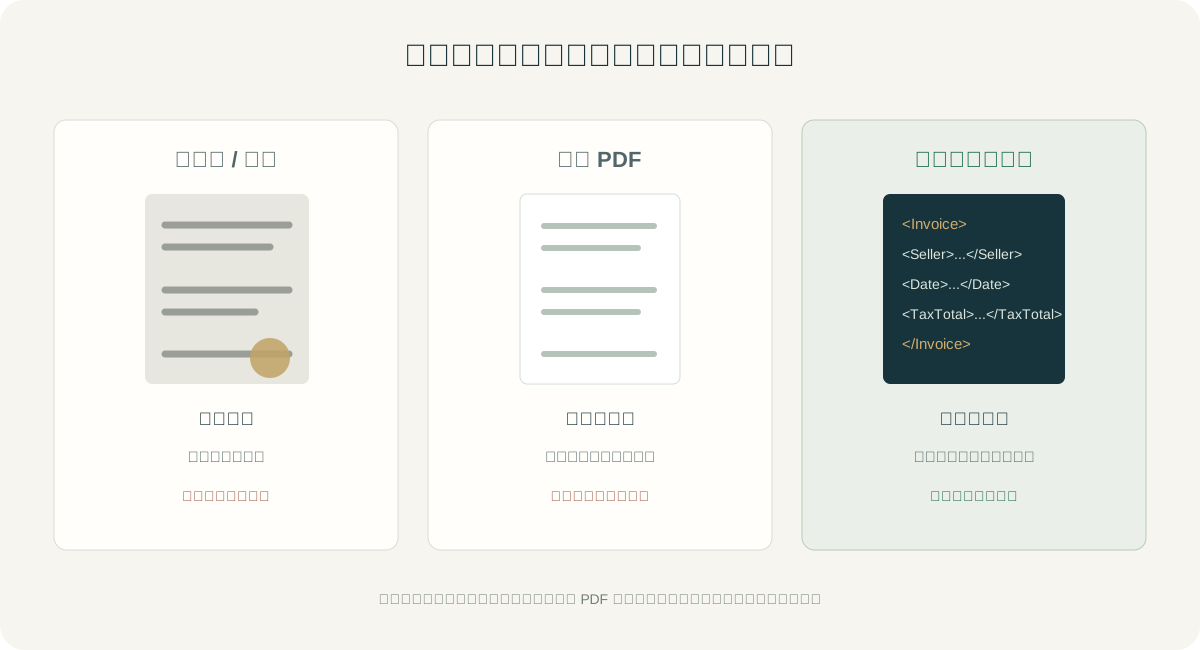
纸质发票扫描成图片、另存为 PDF,确实让传递和保存更方便。但对接收方的财务系统来说,它往往仍是一张“需要人看”的单据:员工打开文件,逐项核对供应商、金额、税额和日期,再把信息录入 ERP 或应付账款系统。
结构化电子发票则把这些信息放在预先约定的数据字段中,例如卖方、买方、发票编号、开票日期、商品行、税率、币种和应付金额。数据通常以 XML 等机器可读格式表达,接收系统可以按规则验证并导入,减少重复录入。
PDF 算不算电子发票?要看语境和当地规则
在日常交流中,人们常把通过邮件发送的 PDF 叫作电子发票。不同国家的法律和税务制度,对“电子发票”的定义、格式和合规要求也不完全相同。因此,不能仅凭文件扩展名判断一张票在某个国家是否满足法定要求。
但在讨论企业系统自动化时,通常需要进一步区分“电子交付的可视文件”和“机器可读的发票数据”。还有混合格式的例子:例如 PDF 中嵌入结构化 XML 数据,既便于人阅读,也能让系统读取。具体能否满足当地要求,仍须按当地主管机关的规则核对。
一张结构化发票,怎样走完一笔业务?
可以把流程想成一条数据链:销售或财务系统生成发票数据,规则引擎检查字段与业务逻辑,再按所在国家或交易网络的要求发送。买方系统接收后,把数据带入应付账款、采购匹配、付款和归档流程。
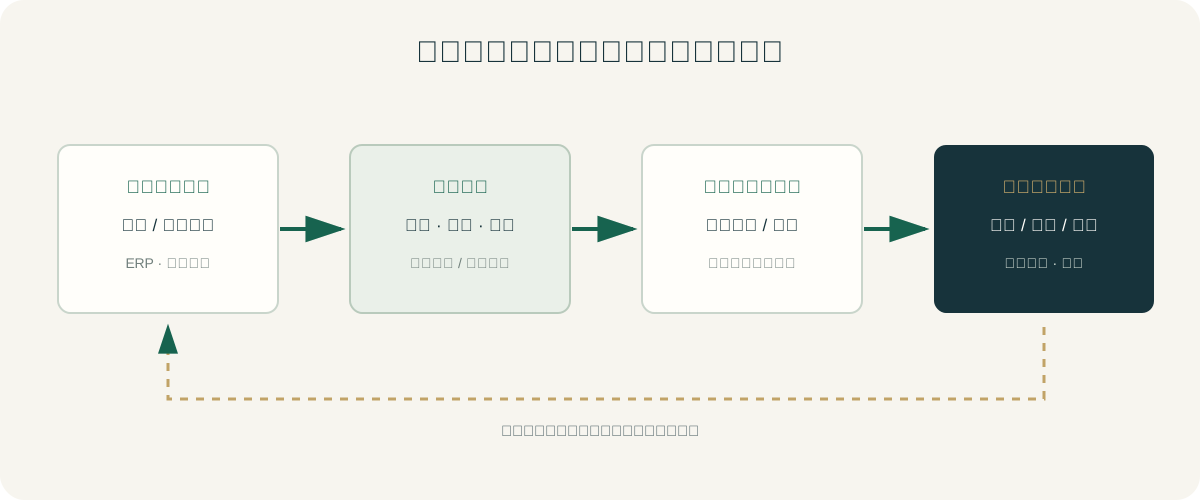
有些国家或场景要求发票数据先经税务平台登记、批准或取得识别号,再交付给客户;另一些模式则由企业直接向交易伙伴传送结构化数据,并按规定向税务机关报告。“电子发票”说的是数据与单据形态;“清关、报告、网络交换”说的是处理和传输机制。二者有关联,但不是一回事。
为什么企业要关心这一区别?
- 减少重复录入:发票字段进入系统后,可以减少逐张敲录和人工转抄。
- 更早发现错误:格式、必填字段、税率或金额关系可在流程中校验。
- 连接前后流程:发票不只用于记账,还可能关联订单、收货、付款、税务申报和审计记录。
- 支持跨系统协作:标准化数据让不同 ERP、财务软件、平台和交易伙伴更容易对接。
这些收益不会因为“发票变成了电子文件”自动出现。要实现自动化,企业还需要统一数据字段、连接业务系统、处理税务规则,并保存可追溯的状态和记录。
读懂电子发票,可以先记住这三句话
- 电子发票不只是文件格式问题,核心是发票数据能否被系统处理。
- PDF 可能是电子交付凭证,但不能一概视为结构化发票或法定合规格式。
- 数据标准、传输网络和税务监管,是电子发票体系里的不同层次。
接下来的系列会继续拆解电子发票的技术架构、数据标准和传输协议,再按区域和国家观察不同模式如何落地。
参考资料
- OpenPeppol:Discovering Peppol(电子发票定义、结构化数据与传输网络)
- European Commission:Navigating the eInvoicing standard documentation(EN 16931 核心发票模型)
- European Commission:eInvoicing FAQ
《电子发票:从一张票到数字交易基础设施》|第 01 篇
撰稿:Global Business Insight
本文为一般性知识介绍,不构成任何国家或地区的税务、法律意见。具体适用要求请以当地主管机关现行规则为准。
What Is an E-Invoice? Does a PDF Count?
From a document people can view to data systems can process.
A PDF invoice can be opened, printed and forwarded on a computer. It is certainly an electronic file. But is it a structured e-invoice? The useful distinction is not whether the document is stored digitally. It is whether another system can reliably identify the invoice data and continue processing it.
The short answer: an electronic file is not necessarily a structured e-invoice
Scanning a paper invoice or saving it as a PDF makes delivery and storage easier. Yet the recipient’s finance system may still treat it as a document that needs to be read by a person. An employee opens the file, checks the supplier, amount, tax and date, then enters the information into an ERP or accounts payable system.
A structured e-invoice stores those details in agreed data fields: seller, buyer, invoice number, issue date, line items, tax rate, currency and amount due. The data is commonly expressed in a machine-readable format such as XML. A receiving system can validate the fields and bring them into a downstream workflow, reducing repeated keying.
Does a PDF count as an e-invoice? Context and local rules matter
In everyday conversation, people often call a PDF sent by email an e-invoice. Legal definitions, required formats and tax rules differ across countries, however. A file extension alone cannot establish whether an invoice meets the legal requirements of a particular jurisdiction.
For business automation, it helps to distinguish an electronically delivered visual document from machine-readable invoice data. Hybrid formats also exist. For example, a PDF can contain embedded structured XML, making it readable to a person and processable by software. Whether a particular format satisfies local rules still needs to be checked against the relevant authority’s requirements.
How does structured invoice data move through a transaction?
Think of the process as a data chain. A sales or finance system creates invoice data. Validation rules check required fields and business logic. The data is then sent according to the requirements of the country or trading network. The buyer’s system receives it and can route it into accounts payable, purchase matching, payment and archiving.
In some countries or scenarios, invoice data must be registered, cleared or assigned an identifier by a tax platform before it is delivered to the customer. In others, businesses exchange structured data directly with trading partners and report data to the tax authority under applicable rules. “E-invoice” describes the invoice data and document form; “clearance, reporting and network exchange” describe processing and transmission mechanisms. They are related, but they are not the same thing.
Why should businesses care about the distinction?
- Less duplicate entry: invoice fields can flow into systems instead of being keyed one document at a time.
- Earlier error detection: formats, required fields, tax rates and amount relationships can be checked during processing.
- Connected workflows: invoices can link to orders, goods receipt, payment, tax reporting and audit records.
- Cross-system collaboration: standardized data makes it easier to connect different ERPs, finance tools, platforms and trading partners.
These benefits do not appear simply because an invoice becomes an electronic file. Automation also requires aligned data fields, system connections, tax rule handling and traceable statuses and records.
Three points to remember
- E-invoicing is not just a file-format question. The core is whether systems can process the invoice data.
- A PDF may be an electronically delivered document, but it is not automatically a structured invoice or a locally compliant format.
- Data standards, transmission networks and tax reporting are different layers of an e-invoicing system.
The next articles will unpack e-invoicing architecture, data standards and transmission protocols, then compare how different models are used across regions and countries.
References
- OpenPeppol, Discovering Peppol (definition, structured data and transmission networks)
- European Commission, Navigating the eInvoicing standard documentation (EN 16931 core invoice model)
- European Commission, eInvoicing FAQ
E-invoicing: From a Single Invoice to Digital Transaction Infrastructure · Article 01
By Global Business Insight
This article provides general information and is not tax or legal advice for any jurisdiction. Check current local requirements with the relevant authority.