电子发票从哪里来:从纸票、EDI 到税务数字化
它不是纸张被 PDF 一步取代的故事,而是数据格式、交换网络和税务监管逐层叠加的过程。
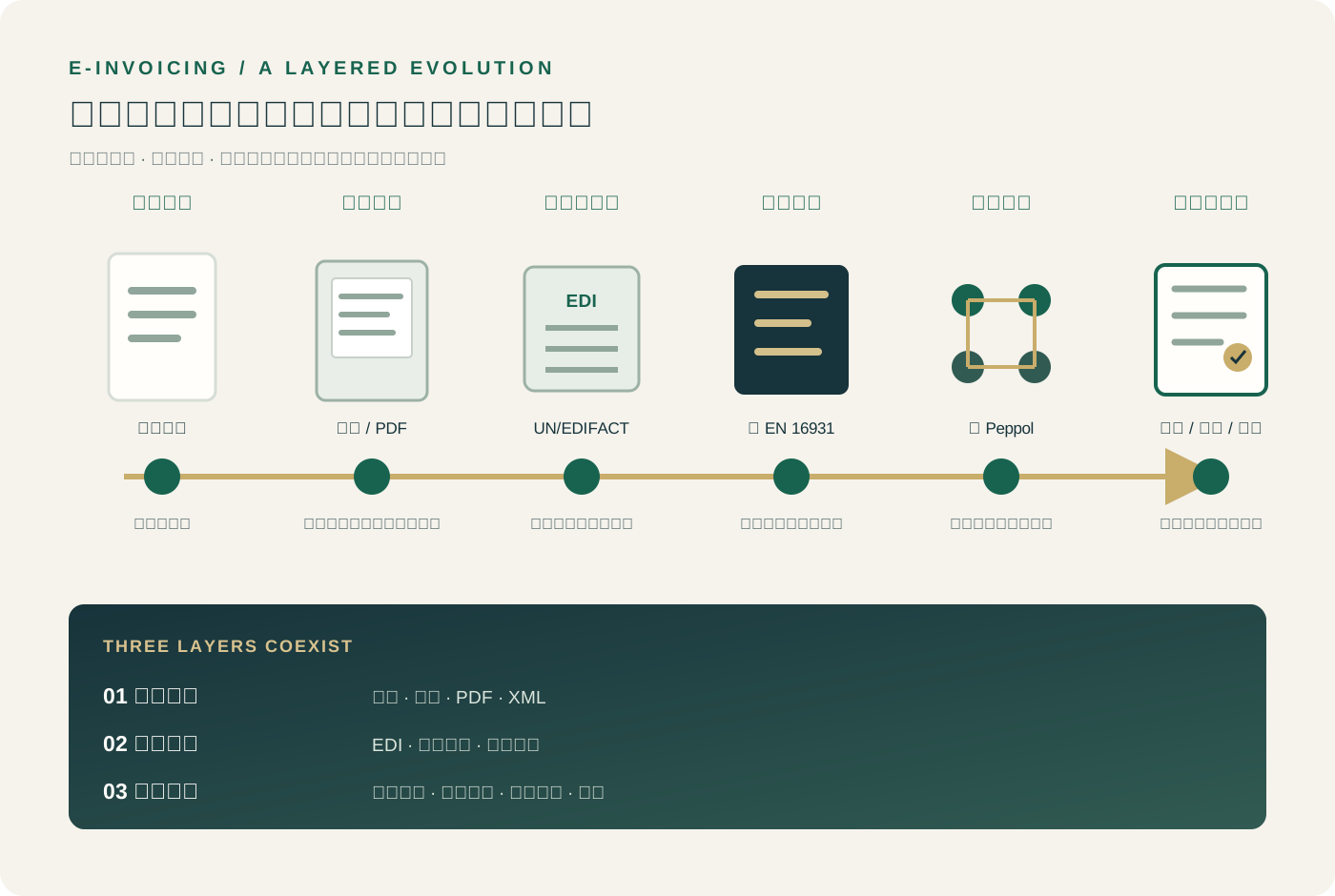
今天谈电子发票,常把几个不同变化混为一谈:把纸票变成屏幕上的文件、让企业系统交换结构化数据、通过网络把交易伙伴连接起来,以及让税务机关更及时地取得交易信息。它们相互推动,却不是同一件事。理解这段演进史,才能判断企业究竟需要改造哪一层。
第一步:纸票的核心价值是留下交易凭证
在数字系统普及前,发票以纸面记录交易双方、商品或服务、金额与税额。它既供买卖双方核对,也为记账、付款和税务申报提供凭证。问题在于,一张纸要进入另一家企业的系统,往往需要重新录入;跨企业流转还要依靠邮寄、传真或人工交接。纸面本身能承载信息,却不天然具备跨系统自动处理能力。
企业把纸票扫描或另存为 PDF 后,获得了更快的电子交付和存档方式。但图像或可视页面仍可能需要人工识别。OCR 可以提取内容,却不能单独保证字段含义一致、数据完整,或满足特定国家的税务格式要求。数字文件是重要过渡,却不是自动化的终点。
第二步:EDI 让发票成为机器之间交换的消息
电子数据交换(EDI)的关键变化,不是“把一张票发得更快”,而是约定计算机如何排列和解释业务字段。联合国欧洲经济委员会将 EDI 概括为依据消息标准、以最少人工介入进行计算机到计算机的数据交换;采购订单、发票和报关信息都可以成为这种交换对象。
联合国的 UN/EDIFACT 工作在 20 世纪 80 年代后期展开。UNECE 资料记载,相关语法规则在 1987 年获批为 ISO 标准;UN/CEFACT 的一份标准介绍资料记载,UN/EDIFACT 首批两类标准消息——采购订单与发票——于 1989 年发布。这意味着企业可以依照共同消息结构传送交易信息,而不必把每张票都当作自由排版的文件。
第三步:标准开始同时规定“字段含义”与“数据写法”
随着交易扩展到更多行业、国家和软件,单有消息格式还不够。发票里的“日期”“税额”“买方识别号”必须有一致的业务含义,系统还要知道这些信息如何写入 XML 等机器可读语法。可以把它理解为两层:语义模型回答“这是什么信息”,语法或格式回答“信息怎样编码”。
欧盟 EN 16931 是一个清晰例子。欧盟委员会介绍,相关标准定义电子发票的核心元素,并为不同系统之间的一致性与互操作提供基础。2014 年《公共采购电子发票指令》要求,在指令适用范围内,公共采购相关公共机构最迟于 2019 年 4 月能够接收和处理符合欧洲标准的电子发票;小型地方机关的过渡期限延至 2020 年 4 月。它针对公共采购范围,不能写成当时所有欧盟企业都必须采用统一的 B2B 电子发票制度。
标准让买卖双方更容易对齐字段,但它不替代税法,也不会自动决定谁必须开票、何时开票、税额如何计算或数据要向谁报告。格式互操作与监管义务仍需分别判断。
第四步:交换网络把点对点连接变成可发现的互联服务
当企业伙伴增多,逐一建立专线或定制接口的维护成本会变高。Peppol 等互操作网络尝试用共同规范和服务提供方连接发送方与接收方。OpenPeppol 的四角模型中,卖方连接自己的接入点,买方连接另一接入点;服务元数据定位器(SML)与发布者(SMP)帮助查找参与方地址和接收能力。
这类网络的价值在于让企业通过服务提供方交换标准化业务文件。它回答“如何找到对方并把消息送达”,并不必然意味着税务机关已经审核或清算发票。某些国家可在互联网络上叠加税务报告或控制流程,另一些则采用不同架构。传输网络和税务控制应分开看。
第五步:税务数字化把重点从单据流转扩展到交易数据报告
税务机关希望更及时地掌握交易数据,政策由此从“接受电子格式”进一步走向数字报告、实时或近实时申报,以及在部分制度中开票前的验证或清算。各国采用的术语、覆盖交易和生效节奏不同:不能把一地的清算模式套用到所有市场,也不能仅因企业在网络上传输发票,就推断已满足所有报告义务。
欧盟“增值税数字化”(ViDA)方案提供了一个有日期的政策例子。截至本文核对日,方案已于 2025 年 3 月获通过并将分阶段实施。欧盟委员会公布的时间表显示,跨境 B2B 数字报告要求从 2030 年 7 月起影响相关交易;到 2035 年 1 月,已经运行国内数字实时交易报告义务的成员国需与欧盟框架对齐。这些是未来分阶段要求,不是 2026 年已经全面生效的统一规则。
一条演进线,三层变化
- 单据表现:纸面、扫描件、PDF 或结构化数据,决定人和系统怎样读取。
- 数据交换:EDI、共同语义标准与互联网络,决定系统如何解释并传递信息。
- 税务控制:事后申报、数字报告、清算或实时验证,决定监管数据怎样、何时提交。
这些层次会交叉并存。企业升级时,先盘点各交易市场要求的数据格式、伙伴连接方式和报告时点,再确定 ERP、税务引擎、发票服务商与归档系统的职责。与其只问“我们要不要上电子发票”,不如问:哪些交易需要什么数据、通过什么网络、向谁报告、留存哪些可追溯证据?
阅读边界与参考资料
本文用标准发展、欧盟公共采购规则和 ViDA 时间表说明演进方向,并不提供某一国家的完整合规清单。各地发票定义、交易覆盖范围、授权机制及生效日期可能不同;落地前应查看当地税务机关最新规定。本文将历史事实与编辑分析分开表述,不把计划日期描述为已生效要求。
- UNECE:《Executive Guide on UN/EDIFACT》——EDI 定义、适用消息与发展背景。
- UNECE:UN/EDIFACT Syntax Implementation Guidelines——1987 年语法规则获批为 ISO 标准。
- UN/CEFACT:Semantics 简介——首批采购订单和发票消息于 1989 年发布。
- 欧盟委员会:eInvoicing in public procurement——指令 2014/55/EU、EN 16931 与适用期限。
- OpenPeppol:Peppol Interoperability Framework——四角模型、接入点与参与方发现。
- 欧盟委员会:VAT in the Digital Age (ViDA)——2025 年通过及 2030、2035 分阶段安排。
《电子发票:从一张票到数字交易基础设施》|第 02 篇
撰稿:Global Business Insight
本文为一般知识与政策演进说明,不构成法律、税务或会计意见。
How E-Invoicing Evolved: From Paper and EDI to Digital Tax Reporting
This is not a straight replacement of paper by PDF. It is the gradual layering of data formats, exchange networks and tax reporting.
“E-invoicing” often bundles several changes together: turning a paper invoice into a digital file, enabling business systems to exchange structured data, connecting trading partners through networks, and giving tax authorities more timely transaction information. These developments reinforce one another, but they are not the same thing. The history helps companies identify which layer they actually need to change.
1. Paper invoices: a record of a transaction
Before digital business systems became common, invoices recorded the parties, goods or services, amounts and taxes on paper. They supported reconciliation, payment, bookkeeping and tax filing. But moving a paper invoice into another company’s system generally required rekeying. Mail, fax and manual handoffs also made cross-company exchange cumbersome.
Scanning a paper invoice or saving it as a PDF improves delivery and storage. Yet an image or visual document may still need to be read by a person. OCR can extract text, but it does not by itself guarantee consistent field meanings, complete data or compliance with a jurisdiction’s required format. The digital file was an important transition, not the end of automation.
2. EDI: invoices become messages exchanged between systems
The important change in Electronic Data Interchange (EDI) was not simply faster delivery. It was an agreement on how computers should arrange and interpret business fields. The United Nations Economic Commission for Europe describes EDI as computer-to-computer interchange according to a message standard with minimum human intervention. Purchase orders, invoices and customs declarations can all be exchanged this way.
UN/EDIFACT work began in the late 1980s. UNECE records that the syntax rules were approved as an ISO standard in 1987. A UN/CEFACT standards presentation identifies the first two UN/EDIFACT standard messages—purchase order and invoice—as published in 1989. Shared message structures made it possible to exchange transaction data without treating each invoice as a freely formatted document.
3. Standards define both meaning and syntax
As trade spread across industries, countries and software, a message format alone was not enough. “Date,” “tax amount” and “buyer identifier” need consistent business meanings, while systems also need rules for expressing the data in a machine-readable syntax such as XML. One layer defines what an element means; another defines how it is encoded.
EN 16931 is a useful example. The European Commission says the standard defines core e-invoice elements and supports consistency and interoperability across systems. Directive 2014/55/EU on electronic invoicing in public procurement required relevant public authorities to receive and process compliant invoices for contracts within scope by April 2019, with a transition deadline for smaller local authorities through April 2020. This concerned public procurement in scope; it should not be recast as a universal EU B2B e-invoicing mandate at that time.
Standards make it easier to align invoice data, but they do not replace tax law or automatically determine who must issue an invoice, when it must be issued, how tax is calculated or where data must be reported. Interoperability and regulatory obligations are separate questions.
4. Networks turn point-to-point links into discoverable connections
As the number of trading partners grows, maintaining custom links or dedicated connections can become expensive. Interoperability networks such as Peppol use common specifications and service providers to connect senders with receivers. In OpenPeppol’s four-corner model, the seller connects to one access point and the buyer to another. The Service Metadata Locator (SML) and Service Metadata Publisher (SMP) help discover participant addresses and receiving capabilities.
The network answers how a participant can be found and how a message can be delivered. It does not necessarily mean that a tax authority has already reviewed or cleared the invoice. Some countries can add tax reporting or control processes to a network; others use different architectures. Keep the transmission network separate from tax control.
5. Digital tax reporting expands the focus to transaction data
Tax authorities increasingly seek more timely transaction data. Policy has therefore expanded from accepting electronic formats to digital reporting, real-time or near-real-time submissions, and—under some regimes—pre-issuance validation or clearance. Terminology, transaction coverage and effective dates vary. A clearance model from one country should not be assumed to apply everywhere, and sending an invoice through a network alone does not prove that every reporting obligation has been met.
The European Union’s VAT in the Digital Age (ViDA) package offers a dated policy example. As checked for this article, the package was adopted in March 2025 and is being phased in. The European Commission’s timeline says digital reporting requirements for relevant cross-border B2B transactions begin on 1 July 2030. By 1 January 2035, Member States that operate domestic digital real-time transaction reporting obligations must align their systems with the EU framework. These are future phased requirements, not rules already fully in force across the EU in 2026.
One evolution, three layers
- Document representation: paper, scans, PDFs or structured data determine how people and systems read an invoice.
- Data exchange: EDI, shared semantic standards and networks determine how systems interpret and transmit information.
- Tax control: periodic filing, digital reporting, clearance or real-time validation determine how and when data reaches authorities.
These layers overlap and coexist. Before upgrading, companies should map the data format, partner connection and reporting timeline required for each market. Then define the roles of ERP, tax engines, e-invoicing providers and archiving systems. Instead of asking only “Do we need e-invoicing?”, ask: what data does each transaction require, through which network, reported to whom, and with what audit trail?
Scope and sources
This article uses standards history, EU public procurement rules and the ViDA timeline to explain the direction of change. It is not a complete compliance guide for any country. Invoice definitions, transaction scope, authorisation mechanisms and effective dates vary; verify current requirements with the relevant tax authority. Historical facts and editorial analysis are stated separately, and scheduled dates are not described as obligations already in force.
- UNECE, Executive Guide on UN/EDIFACT — EDI definition, message scope and development.
- UNECE, UN/EDIFACT Syntax Implementation Guidelines — syntax rules approved as an ISO standard in 1987.
- UN/CEFACT, Semantics introduction — first purchase order and invoice messages published in 1989.
- European Commission, eInvoicing in public procurement — Directive 2014/55/EU, EN 16931 and applicable deadlines.
- OpenPeppol, Peppol Interoperability Framework — four-corner model, access points and participant discovery.
- European Commission, VAT in the Digital Age (ViDA) — adoption and phased 2030/2035 timeline.
E-Invoicing: From an Invoice to Digital Transaction Infrastructure | Article 02
Global Business Insight
This article is general information about standards and policy developments, not legal, tax or accounting advice.